Loyalty clubs: how to increase repeat purchases and retain customers
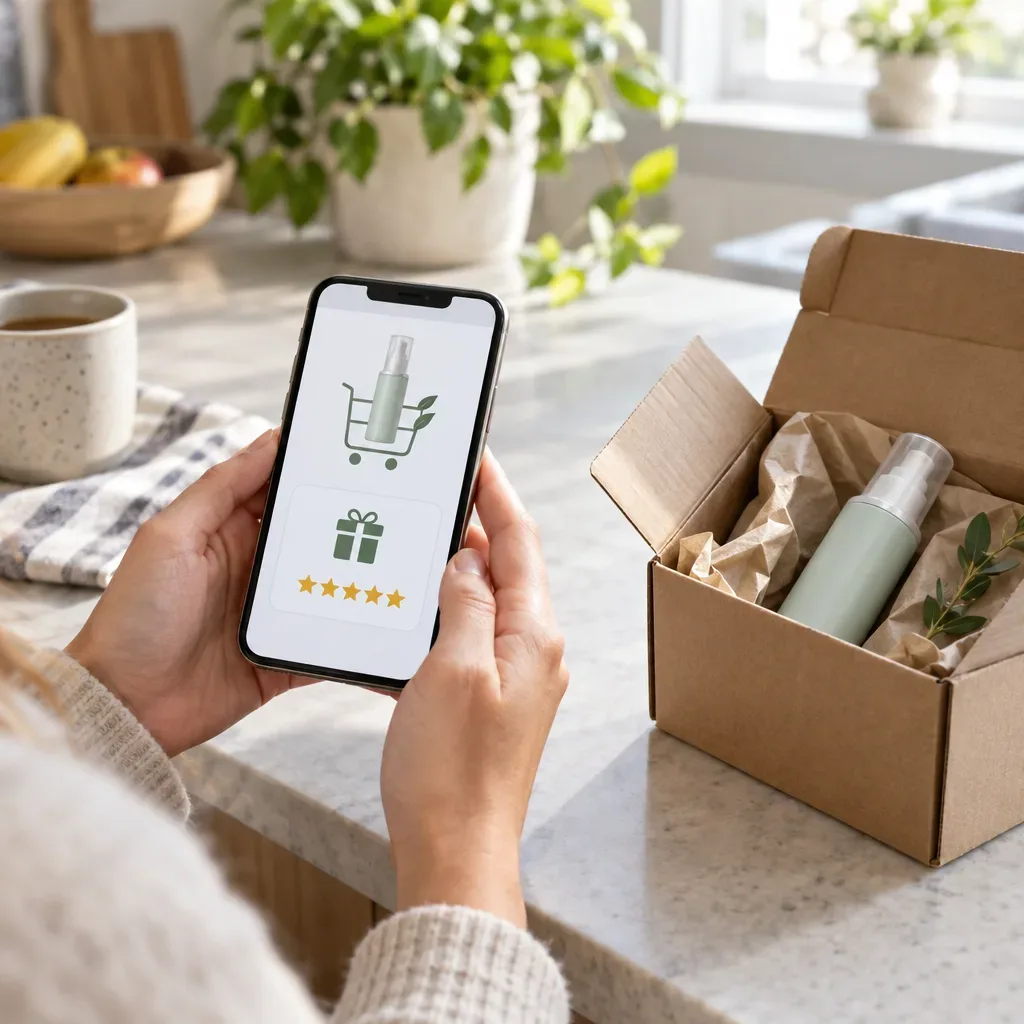
Loyalty clubs: how to increase repeat purchases and retain customers
The customer placed a first order, the product arrived, and the experience was good. Now comes the next challenge: giving them a reason to come back to your store specifically. A loyalty club can help, but signing up alone doesn't guarantee another purchase. Success depends on the value the customer receives, the timing of the message, and the business's ability to run the program profitably.
In this guide we'll look at how to approach increasing repeat purchases with a loyalty club: measuring your starting point, choosing benefits, segmenting customers, and building automations you can test and improve.
Start by measuring: what does a repeat purchase mean for your business?
Before choosing points, coupons, or messages, it's worth setting a baseline metric. A useful definition is the share of customers who made at least one more purchase within a fixed period after their first purchase. A 90-day window may suit some stores, but not necessarily a store selling products that are bought once a year or a brand of consumables that are bought every month.
Here's how to calculate the repeat purchase rate in a 90-day window:
Numerator: the number of customers who made at least one more purchase within 90 days of their first purchase.
Denominator: the number of customers in the acquisition cohort who have already completed 90 days since their first purchase.
Calculation: divide the numerator by the denominator and multiply by 100.
For example, if 50 out of 200 customers who completed the measurement window made another purchase during it, the repeat purchase rate is 25%. Define in advance how canceled or returned orders are handled, and apply the same definition to every cohort.
An acquisition cohort is a group of customers who made their first purchase in a defined period, such as a particular month. Comparing cohorts over the same window lets you examine change over time. If only some of a cohort's customers have completed 90 days, the metric may not represent the whole cohort. So it's better to wait until the window is complete before comparing full cohorts.
Build a simple value proposition for the club
A successful club answers a question the customer understands immediately: why should I join and come back? The answer can be savings, convenience, access to products, or service. There's no need to start with a complex tier system; sometimes one clear offer and a simple sign-up process are a better starting point.
For example, a personal care store can offer members discounted shipping on their next order and a reminder that matches the product's usage cycle. A store that sells limited-edition items may offer early access to a collection. In both cases the value is tied to the reason the customer buys, not just to the business's wish to send a coupon.
Present the sign-up and redemption terms in clear language: what members get, when the benefit is available, whether there's a minimum amount, and when it expires. If the program includes points, explain how they are earned and redeemed. This narrows the gap between expectations and the actual experience.
How do you choose loyalty club benefits?
A good benefit should be relevant to the customer and economical for the business. The options include a discount, points, discounted shipping, early access, a gift, or a valuable service. The choice depends on your product margins, shipping costs, and what your customers value.
A discount on the next order: easy to understand and measure, but it may reduce your margin even on an order that would have been placed anyway.
Points: can illustrate value that builds up over time. It's important to calculate the cost of redemption and to present its terms.
Discounted shipping: may be relevant when shipping costs affect the buying decision. Check the actual cost and the minimum-order conditions.
Early access or service: may create value without a direct discount, as long as they are useful to your audience.
Before launch, calculate the contribution margin: order revenue minus the cost of the products, the discount, the subsidized shipping, and other relevant variable costs. For example, on a ₪200 order, if the products cost ₪100, the subsidized shipping costs ₪20, and the discount is ₪20, the contribution margin before other variable costs is ₪60. That still doesn't prove the benefit is worthwhile: you also need to check how many of the orders would have been placed without it.
Show progress without blurring the terms
Research on the endowed progress effect found that showing initial progress toward a reward may encourage people to complete a task. In a club, you can test a genuine head start in points or a meter showing how much is left to reach a benefit, for example: "You've earned 60 of the 100 points you need." Don't assume the method will work in every store, and don't show progress that doesn't match the actual redemption terms.
Customer segmentation: the same program, different offers
Customers don't buy at the same frequency and don't need the same reminder. Customer segmentation lets you tailor the message to where they stand instead of sending everyone the same offer. A useful starting point is the RFM model, which looks at three dimensions:
Recency: how much time has passed since the last purchase.
Frequency: how often the customer buys.
Monetary: the monetary value of their purchases.
You can score customers on each dimension and identify groups such as new customers, active customers, high-value customers, and those who haven't bought in a long time. Alongside RFM, it's worth taking the product type and the customer's lifecycle stage into account. Someone who bought pet food may need a reminder at a different time than someone who bought a pet bed.
Set your segmentation thresholds based on your store's patterns: 60 days without a purchase may indicate a customer is drifting away in a consumables category, but be a perfectly normal interval in another category. Check actual purchase intervals before defining a customer as inactive.
Examples of tailoring messages by segment
New customer: an explanation of how to use the product and the benefits of the club, before rushing to offer another discount.
Active customer: showing their points balance or early access to a relevant product.
High-value customer: a service or benefit that honors the existing relationship, without assuming a large discount is needed.
Customer who hasn't returned: asking about their needs or a measured offer, after a period appropriate to the category has passed.
Yuping Liu's longitudinal study of a loyalty program found that its effect on buying behavior varied between groups according to their previous purchase patterns. The number of sign-ups alone isn't a measure of success: it's worth checking which segments come back to buy and whether the program contributed to that.
Customer retention automation: what to send and when?
Automation lets you respond to an event or a stage in the customer journey without building every message from scratch. To make it useful, define a trigger, a delay, an exit condition, and a frequency cap for each scenario. Also check that the messages don't clash with promotions or with other automations.
1. Welcome series
Trigger: joining the club, subject to the appropriate permissions. The first message can explain the benefits and their terms. A later message can present relevant products or content. Define when the series stops, for example if the customer unsubscribes from the mailing list.
2. Post-purchase follow-up
Trigger: a completed purchase. After a delay that takes delivery times into account, you can send information about using or caring for the product. If you choose to send a purchase offer, make sure it doesn't arrive before the customer has had a chance to try the first product.
3. Replenishment reminder
Trigger: purchase of a consumable product. Set a delay based on the estimated usage cycle and adjust it according to your store's data. A customer who has already bought again should exit the flow or start a new cycle, so they don't get an unnecessary reminder.
4. Win-back after a period without a purchase
Trigger: a period appropriate to the category has passed since the last order. You can start with useful content or by showing what's new, and only later test a monetary offer. Set an overall frequency cap across the different channels so a customer doesn't receive several messages at once.
Before activating, go through the journey as a customer: Is the trigger recorded correctly? Does a new purchase stop the reminder? Does someone who unsubscribed stop receiving further marketing emails? A simple check can prevent an unpleasant experience and wasted budget.
Check what actually increased purchases and profit
Revenue attributed to a message isn't necessarily revenue generated by it: some customers would have come back to buy even without the message or the benefit. To estimate the true incremental effect, you can run a controlled experiment:
Define a suitable customer population and a clear goal, such as another purchase within 60 days.
Randomly assign the customers to a treatment group and a control group.
The treatment group receives the benefit or message being tested; the control group doesn't. Document which other messages and benefits are available to both groups.
Over the same period, compare the repeat purchase rate and the average contribution margin per customer assigned to each group, including those who didn't buy, after the relevant variable costs.
For example, if the treatment group shows a repeat purchase rate of 24% and the control group 20%, the observed gap is four percentage points. It may indicate an incremental effect, but you should consider the size of the groups and the measurement uncertainty before drawing a conclusion. Even if more customers bought, check that the additional profit exceeds the cost of the benefit and of running it.
It's worth looking at results by segment too, but be careful about drawing conclusions from small groups. In a business with few customers, you can run an experiment over a suitable length of time and get help from a professional with the design and analysis.
Privacy and permissions as part of the planning
A loyalty club relies on personal information and on communicating with customers, so privacy and permissions aren't a step you add only at the end. Collect and keep the information needed for the purposes you've defined, limit access to it, and set up appropriate security and deletion processes.
Check the law that applies to your business, audience, and channel. In Israel, the relevant laws include Section 30A of the Communications Law and the Protection of Privacy Law. Review the requirements for consent or a legal basis, unsubscribing, and data security according to the circumstances. The legislation and its current wording were not checked directly here; this is not legal advice, and we recommend getting appropriate legal advice.
A plan to get started
You don't have to launch every option at once. A phased process lets you learn from customers and make corrections before expanding:
Set a baseline: measure repeat purchases in a window that suits the product and compare complete acquisition cohorts.
Choose a value proposition: define one or two benefits that are easy to explain and to cost.
Segment: start with a few practical groups based on RFM, product type, and customer lifecycle stage.
Run one journey: for example, a replenishment reminder, with exit conditions and a frequency cap.
Test and improve: compare against a control group, examine profitability, and update the offer or the timing.
Retaining customers through a loyalty club is an ongoing process, not a one-time promotion. When the benefit is useful, the message arrives on time, and your measurement separates activity from true incremental impact, you can build a relationship that delivers value to both the customer and the business.
Frequently asked questions
How do you measure the repeat purchase rate?
Define a measurement window, for example 90 days from the first purchase, and check what share of the customers who completed the window made at least one more purchase during it. Define in advance how cancellations and returns are handled, and compare cohorts using the same window.
How does RFM segmentation help a loyalty club?
RFM segmentation scores customers by the time since their last purchase, their purchase frequency, and the monetary value of their purchases. This lets you tailor benefits and messages to different groups, according to the purchase cycle of the products.
How do you check whether a club benefit really increases repeat purchases?
You can randomly assign suitable customers to a treatment group and a control group, and compare the repeat purchase rate and the average contribution margin per customer in each group, over the same period and after the relevant variable costs.
Further reading
Fader, Hardie, and Lee, research on RFM and customer value, Journal of Marketing Research, 2005.
Yuping Liu, a longitudinal study of the impact of loyalty programs, Journal of Marketing, 2007.
Nunes and Drèze, research on the endowed progress effect, Journal of Consumer Research, 2006.
Dorotic, Bijmolt, and Verhoef, a review of research on loyalty programs, International Journal of Management Reviews, 2012.
Whatever your question, the WideCommerce customer service and technical support team is here to give you personal guidance and training in operating the system. The team is available Sunday to Thursday, 09:00–18:00.
Get a quote